

If you've spent years teaching group fitness on land, you've probably heard it before:
"Have you ever thought about teaching water classes?"
Maybe you've brushed it off because you don't consider yourself a swimmer. Or perhaps you've assumed you need years of aquatic experience before stepping onto the pool deck.
The truth is, many successful water fitness instructors started exactly where you are—teaching land-based classes and looking for a new challenge.
If you're curious about adding water fitness to your schedule, here's everything you need to know.
You Don't Have to Be a Competitive Swimmer
One of the biggest misconceptions about water fitness is that instructors need to be excellent swimmers.
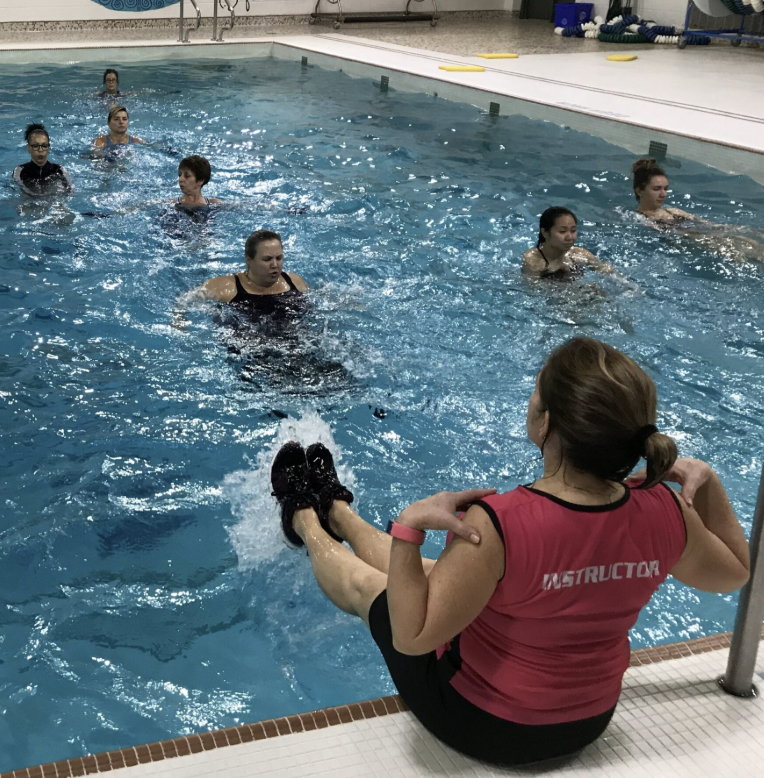
In reality, most water fitness classes take place in shallow water where participants can comfortably stand. Instructors often teach from the pool deck, while others choose to teach from within the water depending on the class format and facility.
What's more important than swimming ability is your ability to:
Demonstrate safe movement
Cue exercises clearly
Motivate participants
Create an engaging class experience
If you're already a great group fitness instructor, you've already mastered many of the most important skills.
Why More Fitness Professionals Are Adding Water Classes
Water fitness continues to grow because it offers something many land classes can't: challenging workouts with significantly less joint impact.
Participants often choose aquatic classes because they're:
Recovering from injury
Managing arthritis or joint pain
Looking for low-impact cardio
Pregnant or postpartum (with medical clearance)
New to exercise
Active older adults wanting to stay strong
Cross-training for other sports
That means instructors who can confidently teach both land and water often become valuable additions to a facility's schedule.
Learn the Basics of Water Movement
Water changes everything.
Exercises that feel easy on land can become surprisingly challenging in the pool because water provides resistance in every direction.
You'll also notice:
Movements slow down naturally.
Balance improves for some participants but becomes more challenging for others.
Core muscles stay engaged throughout class.
Impact on the joints is greatly reduced.
Before teaching, spend time taking a few water fitness classes yourself. Experience how movements feel, observe cueing techniques, and notice how instructors use the water to their advantage.
Earn an Aquatic Fitness Certification
While requirements vary by facility, many employers prefer or require an aquatic fitness certification.
Certification programs typically cover:
Water safety
Pool etiquette
Exercise modifications
Class design
Anatomy and physiology
Aquatic exercise techniques
Special populations
You'll also need current CPR/AED certification, and some facilities may require additional safety training.
Certification not only builds confidence—it also helps you understand the unique science behind exercising in water.
Start by Team Teaching or Subbing
You don't have to jump straight into leading your own class.
Ask experienced instructors if you can:
Observe classes
Team teach
Fill in as a substitute
Assist during larger classes
This gives you valuable experience while helping you become comfortable with the pool environment and the unique pace of aquatic instruction.
Adapt Your Coaching Style
Teaching in a pool requires a few adjustments.
Because participants are farther away and surrounded by splashing water, you'll want to:
Use larger arm gestures.
Project your voice clearly.
Give movement cues slightly earlier.
Keep instructions concise.
Demonstrate exercises from multiple angles when possible.
Many instructors discover that teaching water classes actually improves their communication skills in every format they teach.
Build a Great Playlist
Music remains one of the most powerful motivators in any fitness class—including the pool.
However, music behaves differently in an aquatic environment. Depending on the facility's sound system, lyrics can be difficult to hear, and echoes may affect the overall experience.
Choose upbeat, energetic tracks with a steady tempo that complement the intensity of your class. Instrumental breaks and strong, consistent beats often work especially well.
The right playlist helps participants stay motivated, move confidently, and have fun throughout class.
Your First Class Doesn't Have to Be Perfect
Every instructor remembers their first class.
Maybe you'll forget a cue.
Maybe you'll laugh when someone splashes you.
Maybe your timing won't be perfect.
That's okay.
Participants aren't looking for perfection—they're looking for an instructor who makes them feel welcome, safe, and successful.
Your confidence will grow with every class you teach.
The Rewards Go Beyond the Pool
Many instructors are surprised by how rewarding aquatic fitness becomes.
You'll work with participants who may have believed they couldn't exercise anymore. You'll watch confidence grow, mobility improve, and friendships develop in every class.
Best of all, you'll expand your own teaching opportunities while reaching an entirely new group of exercisers.
If you've been thinking about stepping onto the pool deck, this might be the perfect time to dive in.
Your next favorite class to teach could be waiting just beyond the shallow end.